
St. Clair Parole and Probation
Parole and probation both place a person in the community under rules, but their legal paths differ. Parole follows a state-prison term. The Michigan Parole Board authorizes the release, and the Michigan Department of Corrections Field Operations Administration supervises the person. The sentence is not over merely because the prison term has ended. A parolee remains under MDOC authority until the listed supervision discharge or another lawful end to jurisdiction.
Probation is imposed by a court instead of prison, or after a jail term in some cases. A probationer may never have served in an MDOC prison. Felony probation can appear in OTIS, while District Court probation may require a check with the sentencing court. The case number and court name are crucial because St. Clair County has separate Circuit and District Court routes.
| Point | Parole | Probation |
|---|---|---|
| How it begins | Release from prison after Board action | Community sentence ordered by a court |
| Main public check | OTIS status, Date Paroled, Assigned Location | OTIS for MDOC supervision; court record for local probation |
| What completion means | Discharge from parole jurisdiction | Discharge or completion ordered and recorded by the supervising authority |
| Absconder status | Still under MDOC authority | Still under the sentencing court's jurisdiction |
- Parole
- Conditional release from state prison into MDOC community supervision.
- Probation
- A court-ordered community sentence with stated rules and reporting duties.
- Discharge
- The end of the listed MDOC sentence or supervision term.
- Absconder
- A supervised person reported as having failed to report or remain available.
Verify St. Clair Post-Release Supervision
The official starting point is the Michigan OTIS search. OTIS accepts a six-digit MDOC number or a name, then offers filters for prisoners, parolees, probationers, discharged people, parole absconders, and probation absconders. It covers people currently under MDOC supervision and discharged people within three years after supervision ends. It does not cover a person whose only sentence was in a county jail or city lockup.
- Search with the MDOC number when known. Otherwise use the full name, then a careful spelling variant if needed.
- Open the detail record and compare the MDOC number, age, photo when shown, offense, county, and sentence. Do not rely on a name alone.
- Read status with Assigned Location. “Parolee” and “Probationer” identify active supervision; “Discharged” means the listed MDOC jurisdiction ended.
- Check Date Paroled and the supervision dates. An Earliest Release Date is only a Board-jurisdiction milestone, not proof that prison release occurred.
- Use the court case for local probation, violation orders, and warrants. Contact the assigned office only after confirming the correct person and case.
The official OTIS search form makes those status choices visible. The MDOC search interface is shown here for orientation.
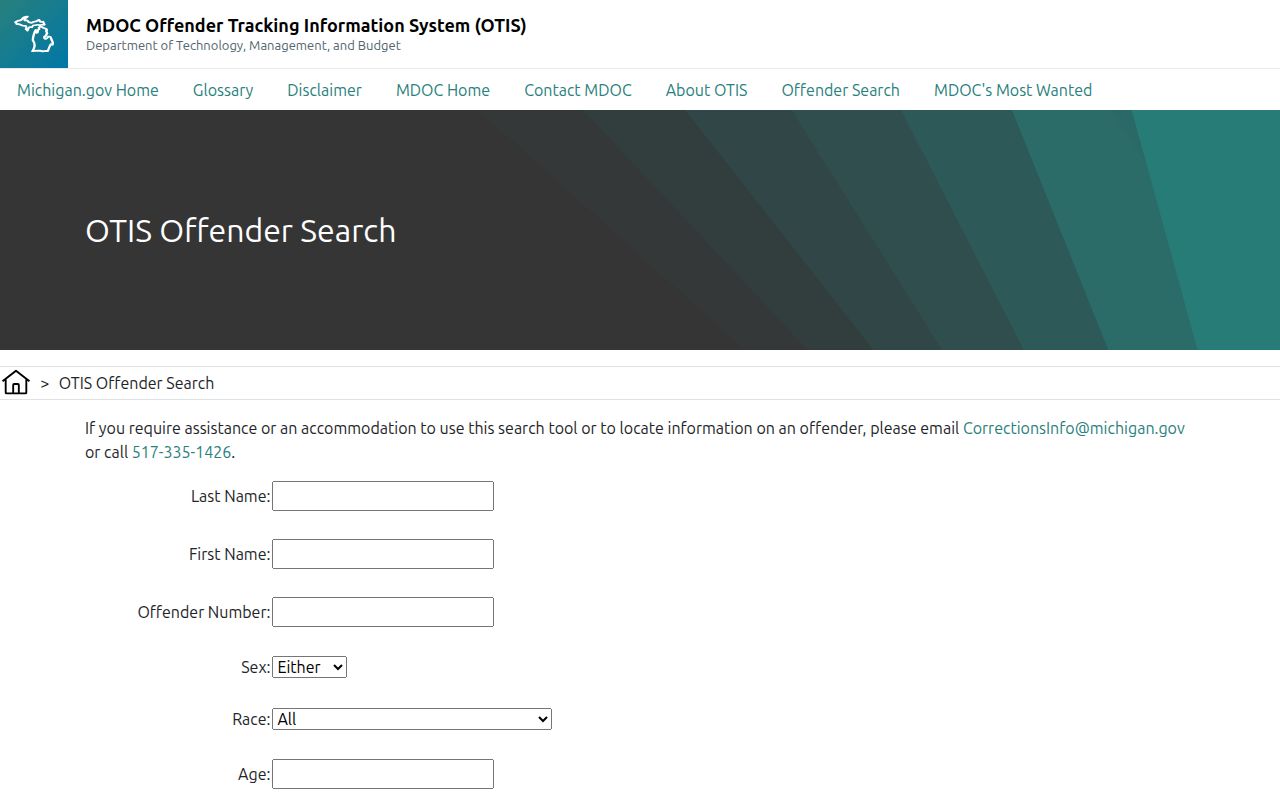
The status filters help separate an active parole or probation term from a discharged record, but each result still needs an identity check.
St. Clair Supervision Office Routes
St. Clair County has separate parole and probation offices. OTIS Assigned Location is the best clue for selecting the right office. For a community-supervised person, it names the office responsible for the case. It is not the person's home address and should not be treated as one. The sentencing court is the other key source when the record involves District Court probation rather than MDOC felony supervision.
Local supervision contacts
St. Clair County Parole Office
4355 24th Avenue, Suite 6
Fort Gratiot, MI 48059
810-982-0602
St. Clair County Probation Office
201 McMorran Boulevard, Room 1300
Port Huron, MI 48060
810-985-2280
District Court probation questions
810-985-2100
The MDOC Region 6 directory also lists the Region 6 Operations Office at 816 Beach Street in Flint, with phone 810-760-0902. Start locally when OTIS identifies a St. Clair assignment. Use the regional route only when the directory or assigned office points there.
The captured Region 6 directory shows how MDOC separates local offices. Review the official office directory before relying on contact details.
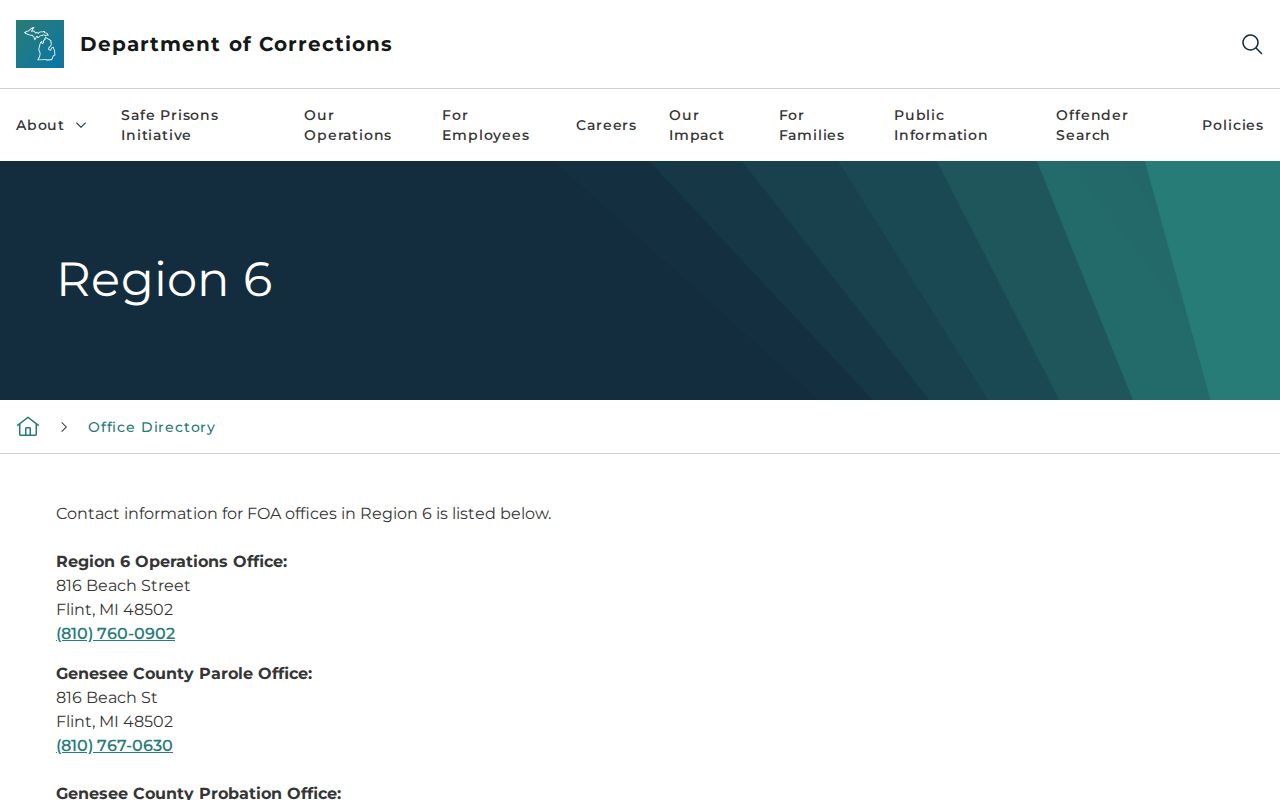
That directory, the OTIS Assigned Location, and the court case together keep parole and probation inquiries on the correct track.
St. Clair Supervision Absconder Status
OTIS exposes separate parole-absconder and probation-absconder filters. This local detail matters. An absconder can be outside a facility yet remain under legal supervision. MDOC describes a parole absconder as someone who failed to report and is actively sought. A probation absconder remains under the jurisdiction of the sentencing county, and information is routed to the proper sheriff.
No separate public St. Clair County absconder list was verified. Use OTIS to observe the published state-supervision status. Then check the court register for a violation filing or warrant event, and ask the court or Sheriff for current confirmation. A missing OTIS result does not prove a warrant. It may reflect a jail-only case, a name difference, an excluded record, or a discharge outside OTIS's public retention period.
St. Clair Parole Release Decisions
A favorable Board decision starts a release process. It does not by itself show that the person left prison. MDOC's Parole Release Unit documents the parole date, term, and special conditions, sends required notices, and coordinates an approved placement. The state parole-process material says at least 28 days is required between the Board's release decision and physical release. New misconduct or other material information can suspend favorable action.
The public record should be read in sequence. A grant means the Board authorized release processing. A scheduled parole date remains prospective. OTIS Date Paroled combined with “Parolee” status is the stronger public sign that release from prison occurred. A later “Discharged” status means the listed supervision ended. Quarterly Board reports count grants, denials, and deferrals, but they are not a public name-search database of individual votes.
Michigan parole interviews also lack a verified comprehensive public calendar. Selected public proceedings can appear on the state hearing-registration page, while ordinary notice goes to the prisoner. Never treat a public-hearing listing, eligibility date, or positive action as an actual exit record.
St. Clair Release Reentry Services
Post-release supervision is only one part of the local transition. The St. Clair County Detention and Intervention Center lists Re-entry Case Management, community referrals, mental-health discharge planning, medication-assisted treatment, peer recovery, and Residential Substance Abuse Treatment. The Sheriff's annual report also states that 120 naloxone kits were distributed at release or on request in 2023.
Those are named local services, not guaranteed benefits for every released person. Jail staff may also help arrange inpatient or outpatient behavioral-health treatment and may supply bus tickets, clothing, or hygiene kits for a release back to the community. A transfer to MDOC, ICE, BOP, another jail, or the U.S. Marshals Service is a different event. The receiving agency controls the next step.
Note: Ask the facility or supervising agent about current eligibility because the annual report does not promise a service in every case.
St. Clair Release Property Rules
The county jail inventories property at booking and returns it when a person is discharged. The person signs for the items, and the remaining trust-account balance is issued by check after stated medical costs are deducted. Property tied to a transfer is held for only 30 days. These county jail rules should not be blended with MDOC prison-release duties.
For an MDOC release, MCL 791.234c concerns state assistance with identification documents before parole or maximum discharge. It does not promise that the St. Clair County jail will issue the same documents. A person released on parole should ask the assigned MDOC office about state obligations and should keep the parole papers, date-paroled record, and any discharge document in separate files.
When St. Clair Supervision Ends
Supervision ends only through the authority that controls it. For MDOC parole or probation, the public marker is a discharged status and the related supervision discharge information. For local court probation, use the sentencing court's register and final order. Completion of a jail term, payment of bond, or removal from a current roster does not prove that supervision ended.
OTIS retains discharged people only while they remain within three years after discharge from MDOC supervision. Older public proof may require the sentencing court, an MDOC record request, or a discharge certificate. For the county jail exit and the broader release record, use the St. Clair County released-inmate search and record paths. The right proof depends on whether the event was jail release, prison parole, probation completion, or full discharge.
MDOC directs many court-derived errors back to the sentencing court. If an OTIS entry has the wrong judgment or sentence information, obtain the corrected court order first. A supervision issue, such as an absconder label, belongs with the assigned parole or probation office. The OTIS landing page also lists a department contact for inaccurate, incomplete, or outdated data. Keep a copy of the record as viewed, the date it was accessed, and the response from the agency that owns the disputed field.
A discharge is narrower than a pardon, dismissal, or set-aside. It says the listed term of corrections authority ended. It does not change every court entry tied to the case. Likewise, the end of one St. Clair County supervision term does not rule out a separate case or another custodian. Match the MDOC number, court case, and dates before deciding that the status applies to the event being researched.